
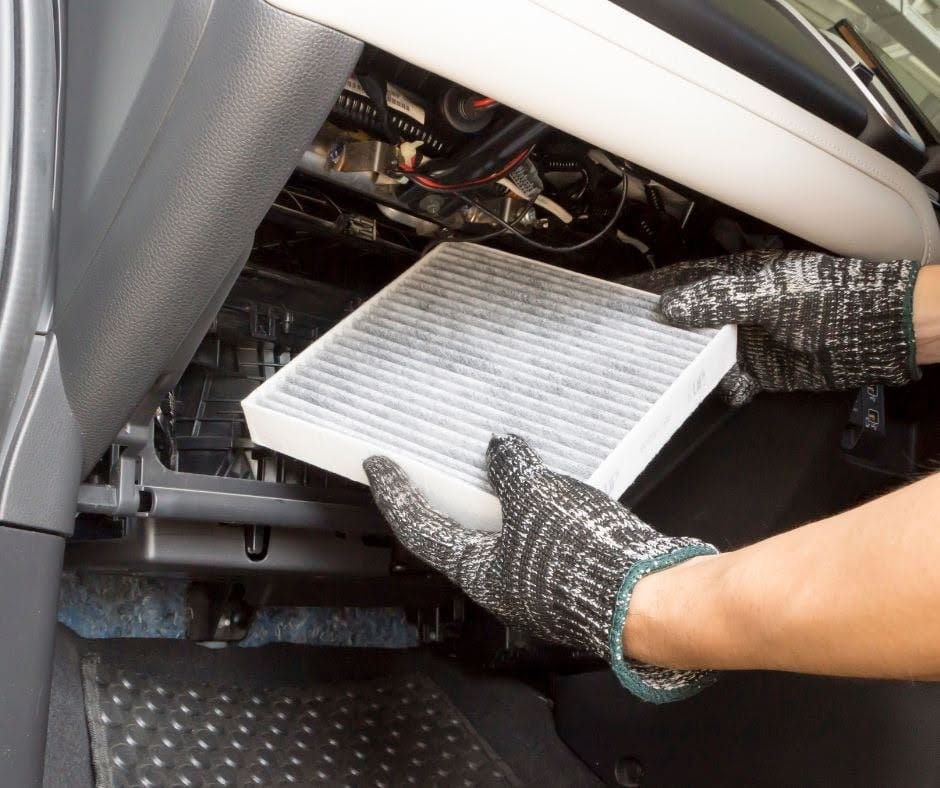
When people say “AC filter”, they usually mean the cabin air filter. That is the one that cleans the air before it reaches you through the vents.
This blog covers how often to change the car AC filter without overthinking it. You will get a simple replacement schedule, the warning signs to watch for, and a quick step-by-step guide you can follow at home.
For most Australian drivers, replacing the cabin air filter once a year is a practical baseline. If you drive on dusty roads, near construction zones, or through heavy traffic regularly, replace it sooner — every six months is not unreasonable in those conditions. Always check your owner’s manual first, as manufacturer intervals vary by vehicle.
Oz Cool Auto & Parts can help you stay on top of your full AC system health with a full air conditioning service, air conditioning repairs, and leak detection. Contact us if you want the system checked at the same time as a filter change.
The cabin air filter traps dust, pollen, soot, and other fine particles before they enter the cabin. If you have allergies, this filter is doing more work than it gets credit for.
It also helps your HVAC system move air properly. A clogged filter makes the fan work harder, which can make the vents feel weak even when the AC is technically still running.
Replace it about every 12 months as a baseline. Put it in the calendar when you do it, and future you will appreciate it.
You will also see kilometre-based guidance. Most Australian AC specialists suggest replacement every 10,000 to 20,000 km depending on the vehicle and driving conditions, with annual replacement as the minimum regardless of kilometres. Your owner’s manual is the most reliable guide because it is the only schedule written specifically for your car, not a generic recommendation.
If you drive on dusty roads or near construction zones, the filter clogs faster, so airflow can drop well before the annual mark. Heavy city pollution and smoke events can also load the filter quickly, even if the car is not doing large distances. High pollen seasons are another reason to replace it sooner, particularly for allergy sufferers, because a fresh filter can make the cabin feel noticeably cleaner.
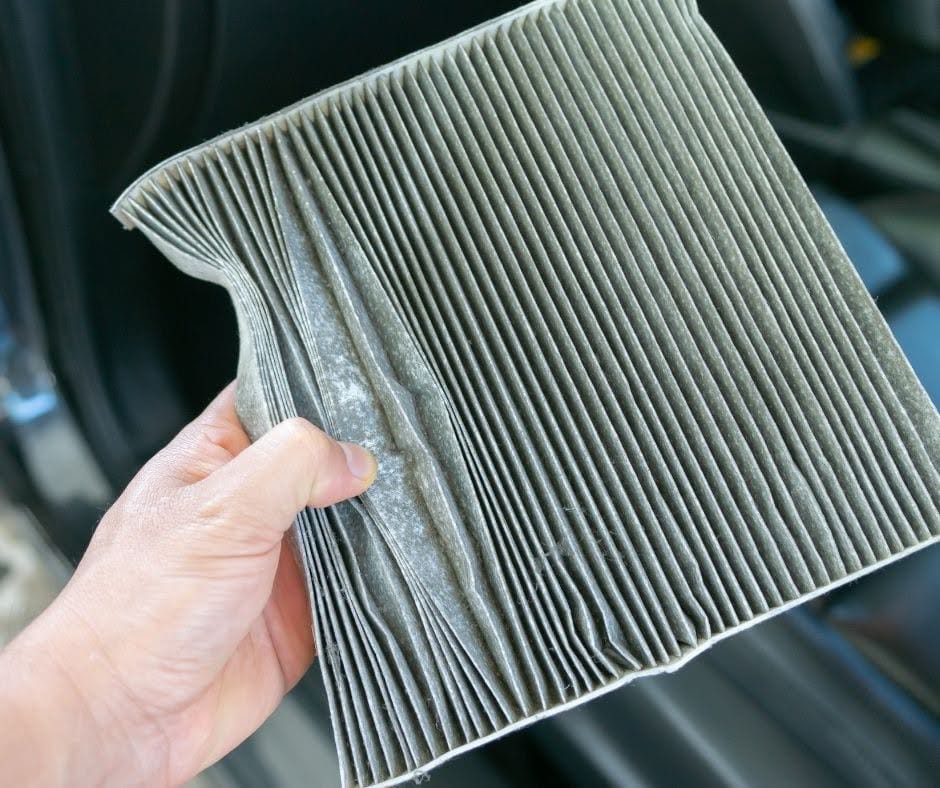
A cabin filter usually fails quietly. Then one day, your vents feel like they are sighing instead of blowing.
If the fan is on high but airflow still feels weak, a clogged cabin air filter could be limiting the air coming through the vents. You will often notice it most when first starting the car or when using the highest fan setting.
A dirty filter can trap moisture, dust, and organic debris, which can create a stale smell. If the odour hits as soon as the fan turns on, the filter is a likely culprit.
If your dash and vents look dusty again soon after cleaning, the filter may no longer be trapping fine particles properly. This is common when the filter is overdue or the car is driven in dusty conditions regularly.
A clogged filter can reduce airflow to the windscreen vents, which makes demisting slower. If fog takes longer to clear than it used to, check the filter before assuming it is a bigger problem.
If you or your passengers start sneezing more inside the car, the cabin air filter may not be trapping allergens properly. You will usually notice it most during high pollen periods or when driving in heavy traffic with poorer air quality.
A quick check now saves you from buying the wrong part or pulling panels apart unnecessarily.
Some vehicles, particularly older models or certain base-level trims, do not have a cabin air filter installed. Check your service manual or a trusted parts guide before buying anything.
A basic particulate filter catches dust and pollen, which suits most drivers. A combination odour plus particulate filter adds an extra layer for smells, which can help with traffic fumes and musty cabin odours.
In many cars, the cabin air filter sits behind the glovebox, and you can usually reach it by lowering the glovebox and removing a small cover. Some models place it under the passenger-side dashboard, which can feel cramped but is still manageable with a torch. A few vehicles locate it under the bonnet near the fresh air intake. Checking the owner’s manual is the quickest way to confirm the exact location for your vehicle.
In many cars, this is a quick DIY job that can improve airflow and cabin freshness noticeably.
Use a new filter that matches your make, model, and year so it fits the housing correctly. If the old filter is heavily soiled, wear gloves and a mask. A torch helps in tight spaces.
Start with the owner’s manual to confirm the filter location and the access steps. Open the filter cover, which is often behind the glovebox. Remove the old filter carefully, match the airflow arrow on the new filter with the direction marked in the housing, refit the cover and glovebox parts, then run the fan for a minute to check airflow and smell.
DIY works well when access is simple and you can reach the housing without forcing trim or clips. Book a service if panels are hard to remove, or if you also want the system checked for odours, moisture, or weak airflow at the same time.
In most cars, a cabin air filter replacement is a low to moderate-cost maintenance job. DIY is usually the cheapest option because you only pay for the filter itself. Workshop replacement costs more because labour is included. Costs can rise if your car requires extra trim to be removed, or if you choose a premium odour-reducing filter over a standard particulate option.
If you are asking how often to change the car AC filter, check your owner’s manual first, then aim for once a year, or sooner if you drive in dust, smoke, or heavy traffic.
Check the filter today to know its condition, then set a reminder for the next change. If you would rather have it sorted by a professional, or if you want the whole system checked at the same time, contact us for a full air conditioning service, air conditioning repairs, and leak detection.
Dusty roads clog the cabin air filter faster than normal driving conditions. Check it at every service and replace it when airflow drops or the filter looks visibly dirty, which may be every six months rather than annually.
For city driving, replacing the cabin air filter about once a year is a practical baseline. If you drive in heavy traffic or areas with high pollution, you may need to change it sooner.
Empty the glovebox, release the stops on each side, and lower it to access the filter cover behind it. Remove the old filter, fit the new one in the same direction as the airflow arrow indicates, then refit the cover and glovebox.
Yes, they refer to the same part. It is called the AC filter because it affects the air coming through the vents, but it sits in the HVAC system and filters all air entering the cabin regardless of whether the AC is on.
Airflow becomes noticeably weaker, the system can develop musty smells, and more dust and allergens can pass through into the cabin. A heavily clogged filter also makes the blower motor work harder than it should.
Yes. A clogged filter traps debris and moisture, which can create lingering unpleasant odours every time the fan runs. Replacing it often improves cabin smell and ventilation performance immediately.
No. Some vehicles, particularly older models or base-level trims, do not have one. Always check your owner’s manual before purchasing a filter or starting to remove panels.
Particulate filters target dust and pollen. Combination filters also address smells, which can help with traffic fumes and musty cabin odours. Choose based on your needs and what your vehicle accepts.
This is generally one of the lower-cost maintenance items for a car. DIY is the cheapest option as you only pay for the filter. Workshop replacement adds labour, and costs can vary if access is more complex on your vehicle.
For many cars, it is a quick job that takes around 15 minutes. It can take a little longer if the glovebox access is tighter or if trim panels need to be released first.