
Car aircon feels like magic. Right up until the day it blows warm, smells odd, or makes a noise that sounds expensive.
This blog will make it less mysterious. You will understand the cycle, what each part does, and what regular maintenance actually helps. Once you know how a car AC system works, you are in a much better position to spot problems early and avoid paying for repairs you did not need.
One important thing to set expectations: your AC does not make cold air. It removes heat and moisture from the cabin air. That distinction matters when something goes wrong.
A car AC system works as a sealed loop. Refrigerant circulates through the system, pulling heat from inside the cabin and releasing it outside. The compressor drives the refrigerant around the loop, the condenser releases heat to the outside air, the evaporator absorbs heat from the cabin, and the expansion valve controls the pressure drop that makes the refrigerant cold.
Oz Cool Auto & Parts stocks quality replacement parts for every major component in this system. Browse our AC compressors, control valves, and fan blower motor resistors or contact us if you are not sure which part is the problem.
Refrigerant circulates through the car in a sealed loop, like a runner doing laps. It pulls heat from the cabin air, then carries that heat outside and releases it. The cycle repeats for as long as the AC stays on.
It also helps reduce humidity inside the car. Moist air hits cold evaporator surfaces, water condenses out, and the windows clear faster. What you feel is warm cabin air getting pulled in, then cooler and drier air coming back out through the vents.
Your car’s AC system relies on several key components, each with a specific function. When they all work together, you get cold, dry air through the vents.
The compressor pressurises the refrigerant and drives it around the system, allowing the cycle to continue. Many cars use a compressor clutch that cycles on and off to help hold a steady cabin temperature. It is often called the heart of the AC system because without it, the cooling cycle cannot begin. Browse our AC compressors if yours is the confirmed fault.
The condenser cools the hot refrigerant and helps it shift toward a liquid state so the cycle can continue. It usually sits at the front of the vehicle near the radiator, so stones, bugs, and blockages can all affect its performance.
This part traps moisture and impurities using desiccant to keep the refrigerant clean. Moisture inside the AC system causes trouble because it can react with refrigerant and metal surfaces to form acids, leading to corrosion and long-term damage to internal components.
The evaporator is where refrigerant evaporates and absorbs heat from the cabin air passing over it. It usually sits under the dashboard, which is why smells and damp issues can seem like they are coming from deep inside the cabin.
The expansion valve or orifice tube is the point where the high-pressure side becomes the low-pressure side. It meters the refrigerant into the evaporator, causing a sharp pressure drop that makes the refrigerant extremely cold. When this component fails, cooling can become inconsistent and temperatures at the vents can swing unexpectedly. Browse our AC control valves if this is the fault.
The blower fan pushes air across the evaporator and sends it out through the vents. The cabin filter helps keep airflow strong and the air clean, and ageing hoses or seals can develop small leaks that slowly weaken cooling over time. Browse our AC fan blower motor resistors if the fan is the issue.
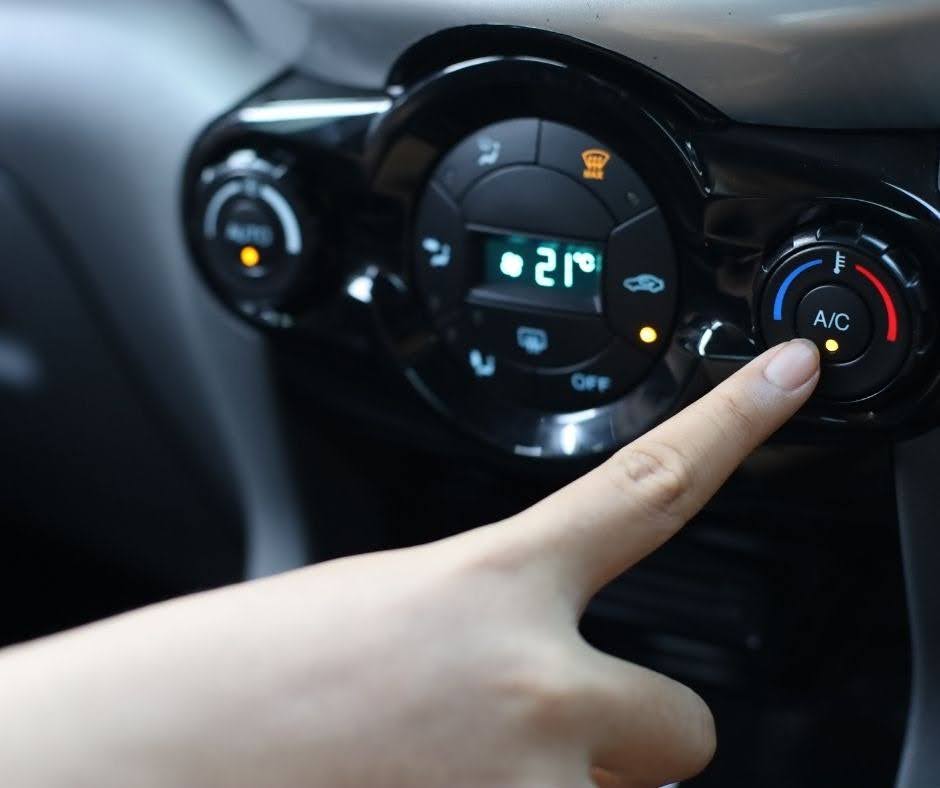
How does a car AC system work when you hit that button? Here is the step-by-step cycle.
When you press the AC button, the system tells the compressor to start working. In many cars, you will hear a faint click as the clutch engages.
The compressor compresses the refrigerant, raising its pressure and temperature. It pushes the refrigerant through the system so the cycle can continue.
The hot, high-pressure refrigerant flows to the condenser at the front of the car. As outside air flows over it, heat is drawn out, which allows the refrigerant to cool down and begin shifting toward a liquid state.
Once it has cooled, the refrigerant moves along as a high-pressure liquid. It then heads toward the expansion valve or orifice tube to be metered into the next stage of the cycle.
At the valve, pressure drops quickly, and the refrigerant temperature drops with it. This is the moment the system creates the cold effect you feel at the vents.
The cold, low-pressure refrigerant flows through the evaporator under the dashboard. Cabin air passing over the evaporator loses heat to the refrigerant, which is why the air coming out feels cold.
The blower fan pushes that cooled air through the vents and into the cabin. The refrigerant, now warmer and in a gaseous state again, returns to the compressor so the loop can start again.
A car AC system is split into two pressure zones that work together to create cooling.
The high-pressure side starts at the compressor, runs through the condenser, then moves to the receiver drier area. This is where the refrigerant is compressed, releases heat outside, and moves toward a liquid state.
The low-pressure side begins after the expansion valve, passes through the evaporator, and returns to the compressor. This is where pressure drops sharply, the refrigerant becomes very cold, and it absorbs heat from the cabin air.
This split matters because pressure controls temperature. When pressures are out of range — due to a leak, a faulty component, or low refrigerant — cooling drops, the system may cycle unpredictably, and components can wear out faster than they should.
Most car AC issues start small, then turn into warm air, strange noises, and growing frustration. Identifying the cause early means a much lower repair bill.
A refrigerant leak is a common reason cooling fades gradually and the car keeps needing a regas. If the level drops again after being topped up, the refrigerant has escaped and the leak needs to be found and fixed properly.
A worn compressor or a faulty clutch can stop the system from building the pressure it needs to cool properly. You might notice no cooling, strange cycling behaviour, or noise when the AC kicks in.
The condenser sits at the front of the car and takes the brunt of stones, bugs, and road grime. If it is damaged or blocked, it cannot release heat properly, which weakens cooling and can push system pressures higher.
A faulty expansion valve can cause uneven cooling and temperature swings at the vents. Airflow may feel weaker than usual, and you might hear odd noises as pressures shift around.
A corroded or blocked evaporator cannot pull heat out properly, so the air stays warmer than it should. It can also cause drainage problems or icing that makes cooling worse over time.
Moisture inside the system can cause corrosion and damage components over time. A saturated receiver drier stops trapping moisture effectively, which increases the risk of internal wear and acidic contamination.
A good rule of thumb is to have your car’s AC checked about every one to two years. Even if it still feels cold, a routine full AC service can catch small issues before they turn into a warm-air surprise in the middle of summer.
A proper service includes pressure and refrigerant level checks, leak detection, and an inspection of key components. It should also include a cabin filter check, since a clogged filter can restrict airflow even when the system is otherwise working well.
Your car AC works as a sealed system that pushes heat out of the cabin. When one part starts failing, cooling drops quickly and you will notice it.
If the air is not as cold as it used to be, there are new smells, or you hear unfamiliar noises, get it checked early. Oz Cool Auto & Parts offers a full air conditioning service, air conditioning repairs, and an AC regas or refill. Contact us to get it sorted before a small issue becomes a bigger repair.
It activates the compressor so refrigerant can circulate through a sealed loop. The refrigerant carries heat out of the cabin and releases it outside, and a blower fan pushes the cooled air through the vents.
Refrigerant becomes very cold at the expansion valve as pressure drops sharply, then absorbs heat in the evaporator. A blower fan pushes air across the evaporator and sends cooled air through the vents.
Moist cabin air passes over cold evaporator surfaces, and moisture condenses out of the air onto the coil. This helps the cabin feel less sticky and improves demisting because drier air clears glass faster.
The key parts are the compressor, condenser, expansion valve or orifice tube, and evaporator. Most systems also include a receiver drier or accumulator, hoses, a cabin filter, and a blower fan.
Low refrigerant reduces the system’s ability to absorb and move heat through the cycle. A proper service checks refrigerant levels and finds the leak rather than only topping up, because refrigerant loss almost always points to a leak somewhere in the system.
Cooling can become inconsistent, with temperatures at the vents fluctuating. Airflow may feel weaker than usual, and unusual noises can appear as pressures shift around unpredictably.
The condenser releases heat to the outside air, so damage or blockage reduces how well heat transfers out of the system. That leads to higher pressures and weaker cooling, particularly in slow traffic where airflow over the condenser is reduced.
It traps moisture and impurities to protect internal components from corrosion and contamination. Without it functioning properly, moisture can mix with refrigerant to form acids that damage the system from the inside.
A common guideline is every one to two years, even if it still feels cold. Servicing includes leak checks, pressure checks, refrigerant assessment, and a cabin filter inspection.
A regas can help short term if the refrigerant level is low, but it will not fix leaks or failing parts. If cooling drops again after a regas, a proper inspection and diagnosis is the right next step.