
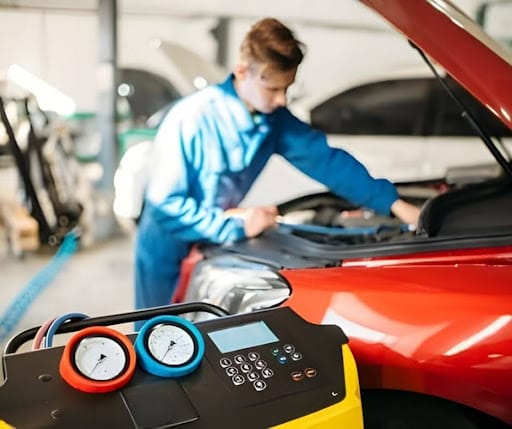
Knowing how to check for an AC leak in a car matters because refrigerant should not simply run out. If the level is low, it almost always means there is a leak somewhere in the system.
When your car’s aircon stops cooling properly, a refrigerant leak is one of the first things to check. Less gas means less heat removal, so the cabin feels warmer and the system works harder to compensate.
The main ways to check AC gas leaks in a car are a pressure gauge reading, a visual inspection for oily residue around hoses and fittings, a soapy water spray on accessible joints, UV dye detection, and an electronic leak detector for harder-to-find leaks. Start with the quick visual checks before moving to specialist tools.
Oz Cool Auto & Parts offers professional leak detection and air conditioning repairs for drivers across North Lakes and the surrounding area. If you suspect a leak but cannot find it, our team can track it down properly before it causes further damage.
Warm air becomes the new normal. You crank the fan, adjust the dial, and the vents still feel like a gentle hair dryer.
Leaks can also lead to bigger repairs. Low refrigerant means less lubrication in the system, so parts work harder, wear out faster, and the cost of the eventual repair grows the longer the leak goes unaddressed.

AC leaks often start with small drops in cooling or unusual noises. Spot these signs early so you can sort the issue before it gets worse.
Warm air from the vents is often a sign that the refrigerant level is low. Less gas means less cooling at the vents, and the difference can be gradual at first.
The system might still produce some cool air, but it takes much longer to feel comfortable, especially on a hot day. That gradual loss of cooling often points to a leak that has been present for some time.
A hissing sound can mean refrigerant is escaping under pressure from a hose or fitting. Bubbling sounds can occur when the system charge is low and the compressor is struggling to circulate refrigerant properly.
Leaks often leave an oily residue on hoses, fittings, and around the compressor area. If you spot greasy or damp marks near AC components, it is worth investigating further.
If you want to know how to check AC leakage in a car, these tools can help you spot low refrigerant and find the source.
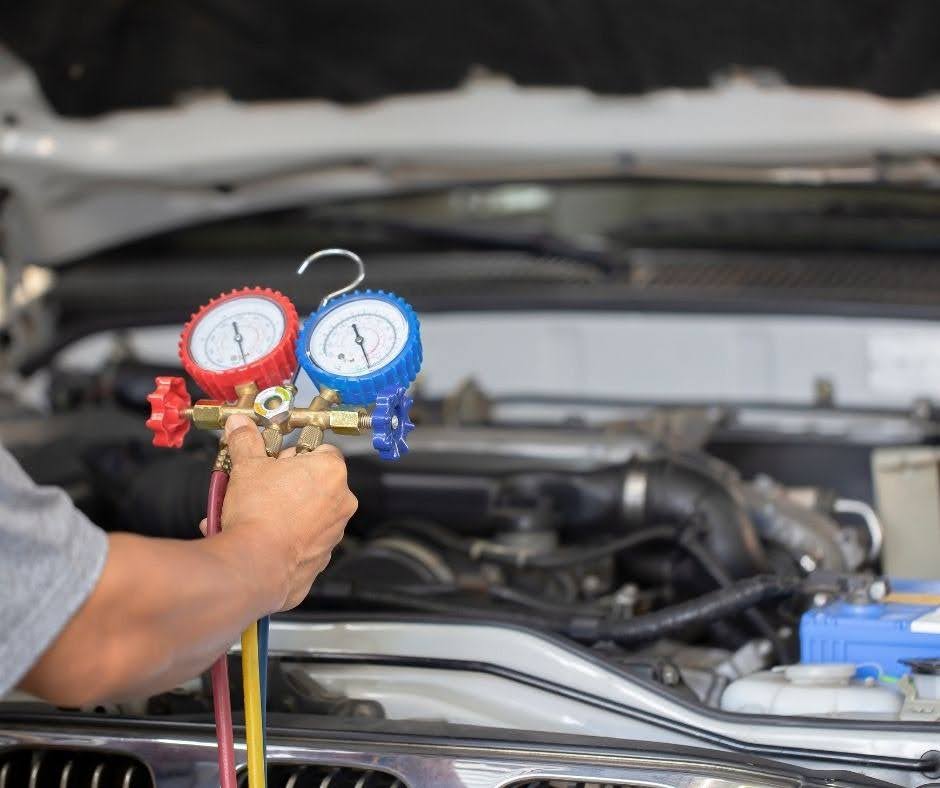
A gauge gives you a quick reading of system pressure. A low reading can confirm the refrigerant charge is low, which is often the first indication of a leak.
UV dye circulates through the system with the refrigerant. A black light then reveals bright dye marks at the point where the leak is occurring, which can be particularly useful for finding leaks that are not immediately visible.
This tool senses refrigerant gas around hoses, fittings, and components. It can help find tiny leaks that are too small to spot visually or with soapy water.
Soapy water can reveal a leak by bubbling where gas is escaping. It works best on accessible joints, connections, and hose fittings and requires no specialist equipment.
Start with these checks that do not require taking anything apart.
Connect the low-pressure gauge to the correct AC service port. If the reading is low, the refrigerant level is likely low too. This does not confirm where the leak is, but it confirms the system needs further investigation.
Check hoses, fittings, and the compressor area for oily residue or damp patches. Leaks often leave grime that looks wet or sticky, and the residue can collect dirt over time, making it look dark and greasy around the source.
Spray soapy water onto hose joints and connection points while the system is running. Bubbles that keep forming in the same spot usually mark the leak point.
Add UV dye to the system and run the AC to circulate it through the loop. Use a black light to look for bright dye traces around leaking parts, particularly around hose connections, fittings, and the condenser.
Slowly move the detector around fittings, hoses, and components. If it alerts consistently in one area, you are likely near a refrigerant leak. Move the detector slowly to narrow down the location.
Always wear gloves and safety glasses before you start, because refrigerant can irritate skin and eyes. Stick to visual and external checks and avoid opening lines or releasing gas, since the system operates under pressure.
In Australia, refrigerant handling must be carried out by a licensed technician. If any checks point to a leak that requires opening the system, stop and book a licensed professional to handle it properly.
Call a professional if you cannot find the leak after basic checks, or if the cooling keeps dropping despite the system appearing intact. You will also need a licensed AC technician if the system needs a regas, parts replaced, or any repairs to lines, seals, or internal components.
A professional has the right tools to pressure-test the system, recover refrigerant safely, and fix the leak properly so it does not come straight back. Our full air conditioning service includes a thorough leak check as part of the process.
Once you know the warning signs, prevention is the next step. These habits help keep the system in good shape between professional services.
Test the AC in spring so you are not caught out in summer. If it feels weak early in the season, you can have it fixed before the busy period and before the heat makes it urgent.
Regular servicing helps spot small leaks and worn seals before they become larger problems. It also keeps pressures and overall performance where they should be.
Turn it on for a few minutes every week or two, even in winter. This helps keep seals lubricated and stops them from drying out, which is one of the more common causes of slow refrigerant loss over time.
Checking your AC early can save a lot of hassle and money later. Start with the basics — a pressure gauge reading, a quick visual check for oily residue, and simple leak checks using soapy water, UV dye, or an electronic detector.
If the cooling drops, act quickly instead of letting it slide. Small leaks lead to bigger repairs when the system keeps running low on refrigerant, and the compressor and other components wear out faster as a result.
For a proper fix, contact us for a full air conditioning service, AC regas or refill, and air conditioning repairs. We will help you get cold air back where it belongs.
A good habit is to check your car’s AC performance at least once a year, particularly before summer. If cooling starts to drop at any point, check it sooner rather than waiting for the seasonal inspection.
Yes, you can do a basic check by listening for unusual sounds and looking for oily spots on AC lines. However, tools like a UV light or electronic leak detector make the job much more accurate and reliable, particularly for smaller or harder-to-reach leaks.
Loss of cold air is usually due to low refrigerant, which is almost always caused by a leak somewhere in the system. It could also be related to a faulty compressor, a blocked condenser, or other component faults, which is why a proper diagnosis matters.
A visual inspection or soap solution test can take around 15 to 30 minutes for accessible areas. Using an electronic leak detector or UV dye may take longer but is more reliable for finding small or hidden leaks.
No. Refrigerant leaks do not seal themselves and can get worse over time as seals dry out further or fittings loosen. It is important to locate and repair even small leaks early to avoid more costly damage down the line.
Not all leak detection requires a professional, particularly if the leak is obvious and accessible. However, for hidden, internal, or hard-to-reach leaks, professional diagnosis is the safest and most accurate approach, and any refrigerant handling must be done by a licensed technician.
UV dye kits and electronic leak detectors are highly effective for locating small leaks. A soap solution can also help but may miss very fine leaks or those in less accessible areas.
Yes. Refrigerant can cause skin and eye irritation and should be handled with care. Always wear protective gloves and glasses, avoid inhaling fumes, and never attempt to open the AC system or handle refrigerant without the correct training and licensing.
No. A regas restores the charge temporarily but does not repair the leak. If the system loses pressure again after being topped up, the leak is still present and needs to be found and fixed before the next regas.
Book a professional AC inspection. Technicians have access to pressure testing equipment, UV light inspection, and electronic sniffers that can find leaks in areas that are not accessible by eye. Getting it found properly is far cheaper than repeated regassing on a system that keeps losing charge.