
If your car air conditioner stops cooling, it can quickly make driving uncomfortable, especially in hot weather. This issue is often caused by low refrigerant levels, a faulty compressor, a blocked condenser, or electrical problems within the system. Identifying the cause early can help prevent further damage and costly repairs. Once inspected, you may be told the compressor needs replacing. You may also hear the words “oil balancing” for the first time.
It might sound like a minor detail, but the AC compressor oil inside your system plays a critical role. Using too much, too little, or the wrong type can reduce cooling performance and significantly shorten the life of the compressor.
The compressor relies on the correct oil for proper lubrication and efficient operation. If the oil level or type is incorrect, the system may struggle to cool effectively, and the compressor can wear out prematurely, leading to more costly repairs down the line.
This article explains what AC compressor oil balancing means, when it matters, and what to ask before approving the repair.
AC compressor oil balancing means ensuring the replacement compressor has the correct oil type and the correct oil quantity for the entire air conditioning system. It is not simply about adding some oil to the new part. The system must have the right oil, in the right quantity, matched to the specific vehicle and repair conditions to operate properly.
Oz Cool Auto & Parts specialises in professional AC compressor replacement, using quality aftermarket and genuine parts to restore your vehicle’s cooling performance. With over 25 years of experience in automotive air conditioning, the team understands exactly what it takes to get a system running efficiently again, including getting the oil balancing right. Browse our AC compressors for quality options backed by a 12-month warranty and free shipping Australia-wide.
AC compressor oil is a specialised lubricant used within your vehicle’s air conditioning system. Its primary function is to lubricate the internal moving parts of the compressor, allowing it to operate smoothly, minimise wear, and maintain consistent performance.
Manufacturer guidelines indicate that the oil also plays an important role in sealing and heat control within the system, helping to ensure efficient operation and long-term reliability.
If the AC compressor oil level or oil balancing is not done correctly, it can have a direct impact on both performance and reliability of the entire air conditioning system.
The compressor relies on the correct amount and type of oil to maintain proper lubrication of its internal components. When the oil level is too low, there is not enough lubrication, which increases friction and heat inside the compressor. Over time, this leads to accelerated wear, internal damage, and in many cases complete compressor failure.
Too much oil can be just as problematic. Excess oil can reduce the system’s ability to circulate refrigerant efficiently, which lowers cooling performance. It can also cause oil to pool in parts of the system such as the condenser or evaporator, further reducing efficiency and putting additional strain on the compressor.
Incorrect oil type is another common issue. Different systems require specific oils such as PAG oil, and using the wrong one can lead to poor lubrication, chemical incompatibility with refrigerant, and premature component failure.
When oil balancing is done properly, the correct amount of oil is distributed throughout the system, taking into account components like the condenser, evaporator, and hoses. This ensures the compressor operates smoothly, maintains proper cooling output, and has a longer service life.
Getting the oil balancing right is not just a small detail. It is essential for protecting the compressor, maintaining strong cooling performance, and avoiding costly repairs.
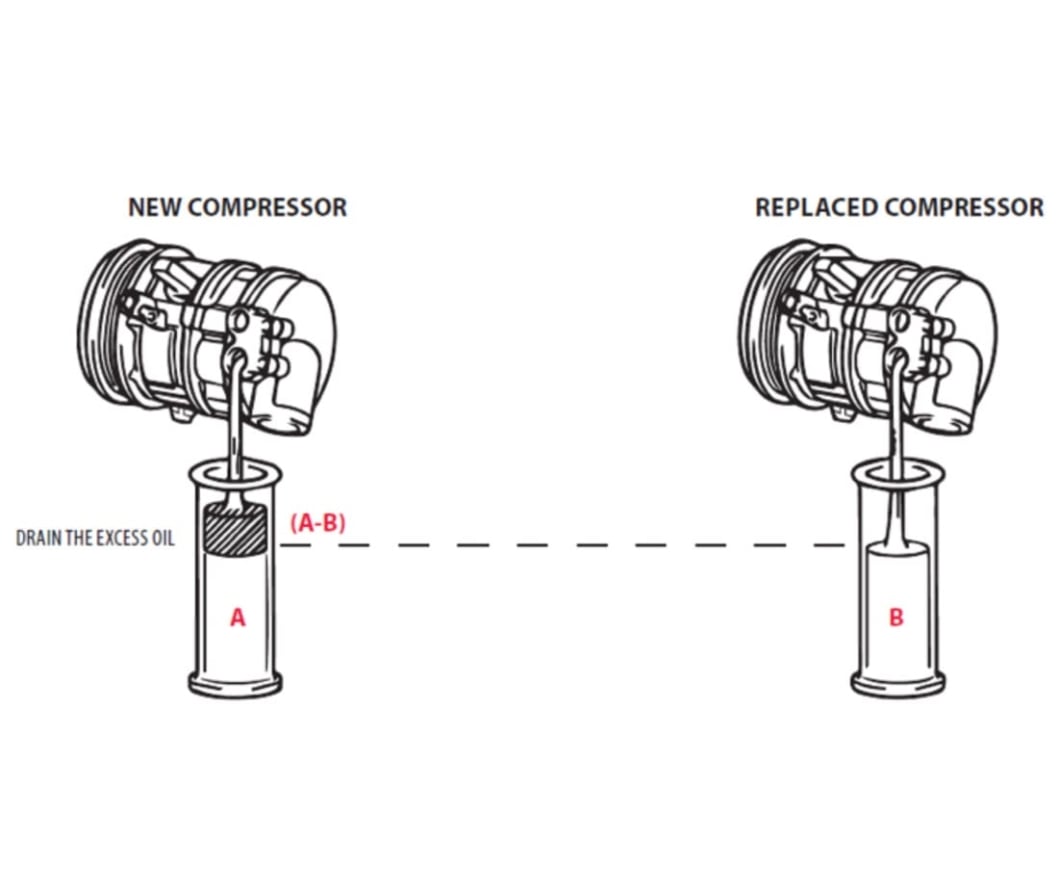
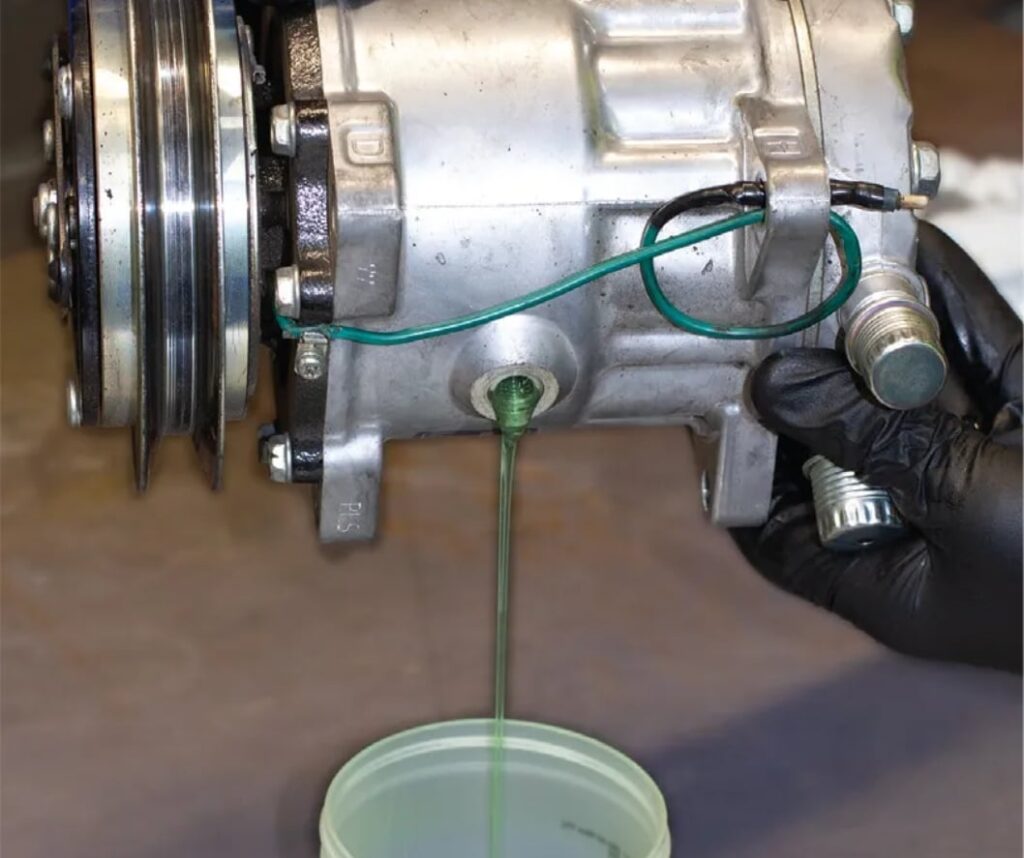
A new compressor is not always ready to install straight out of the box. Some replacement units come with full oil, some with partial oil, and some with no oil at all. If oil is already inside the new compressor, it still needs to be drained and adjusted to match the vehicle’s required amount. That is the step many workshops skip. New does not mean ready to go. Oil balancing is required every time a new compressor is installed.
Air conditioner compressor oil balancing is also critical whenever oil has been removed during a flush or when multiple AC components have been replaced. In these cases, the technician must correctly re-establish the oil balance before running the system to ensure proper lubrication, reliable performance, and to prevent premature compressor damage.
Oil balance can affect far more than compressor lubrication. If it is wrong, cooling, reliability, and compressor life can all suffer.
Too much oil can reduce cooling efficiency because it takes up space that should be used by refrigerant. It can also circulate too heavily through the system and affect how well key parts do their job. In more serious cases, it can put extra stress on the compressor and may lead to hydraulic lock or internal damage.
Too little oil means the compressor does not get the lubrication it needs. That increases friction, heat, and wear inside the unit. If left unchecked, it can lead to compressor seizure and a much bigger repair bill.
Using the wrong oil type or viscosity can make the compressor run noisily or less smoothly. It can also lead to poor lubrication and faster wear on internal parts. In some cases, it may cause the new or repaired compressor to fail again sooner than expected. PAG 46, PAG 100, and PAG 150 are different grades with different applications – the correct one must match the vehicle manufacturer’s specification.
This is not a job that should be approached with guesswork. A proper, methodical process must be followed to protect both cooling performance and the longevity of the compressor.
The correct oil quantity should come from the vehicle manufacturer’s data. That includes the required oil type, viscosity, and amount for that specific system. If a workshop starts with guesswork, the risk of problems goes up fast.
When replacing an air conditioning compressor, one of the most important steps is to measure the oil drained from the old unit. This ensures the correct amount of oil is returned to the system, helping maintain proper lubrication and optimal cooling performance. If this step is skipped or done incorrectly, it can lead to serious issues, including premature compressor failure.
Some new compressors come with oil already inside them. That does not mean the amount is correct for the vehicle being repaired. In all cases, the AC compressor oil needs to be drained and measured before the new compressor is fitted.
Before starting the system, the compressor should be rotated by hand if the manufacturer recommends it. This helps move oil through the unit before it begins working under load. It reduces dry-start stress and helps protect the internal parts.
A good workshop does not assume every compressor is already balanced and ready to install. It also does not treat all PAG oils as interchangeable or rely on a rough top-up estimate. Small shortcuts here can lead to poor cooling, noisy operation, or repeated failure.
A compressor repair is not the time to nod and hope for the best. A few clear questions can help you spot whether the job is being handled properly.
AC compressor oil gets talked about a lot, but not always accurately. A few bad assumptions can turn a repair into a repeat problem.
More oil does not mean better protection. Too much oil can reduce cooling performance and put extra strain on the system.
Not all PAG oils are the same. The correct grade must match the vehicle and system specification. Using PAG 46 where PAG 100 is required, for example, can cause the compressor to run noisily and wear prematurely.
A new compressor is not always ready to fit straight out of the box. Units need the oil checked, adjusted, or drained before installation, regardless of whether they arrive with oil inside.
Adding oil without the correct spec is a gamble. The wrong type or amount can cause poor performance and shorten compressor life considerably.

Some problems after a repair can point to an oil-related issue. They are only warning signs, not proof on their own.
If the air con still does not cool properly after replacement, the oil setup may need a closer look. Poor cooling can happen when the oil type or amount is not right for the system.
New noises from the compressor can be a sign that something is not working as it should. Incorrect oil can affect lubrication and place extra stress on internal parts.
A repeat failure soon after repair is a sign that the original setup may need to be reviewed. Incorrect AC compressor oil or no oil balancing at all can be part of the problem.
A workshop should be able to explain what oil was used and how much went into the system. If they cannot confirm that clearly, it is fair to ask more questions before trusting the repair.
Car air conditioning work is not just about replacing parts. In Australia, refrigerant handling is regulated, so work on systems and components that could release refrigerant must be carried out by technicians with the proper AC licence. Always look for the tick.
That matters during compressor replacement because this kind of repair involves the whole AC system, not just one part. When the process is handled properly, there is a better chance of getting the oil spec right, protecting the system, and keeping the repair compliant with Australian requirements.
At Oz Cool Auto & Parts, that approach carries through every job, whether you need a full air conditioning service, an air conditioning regas, or air conditioning repairs. If your system is not cooling properly or you have been told the compressor may need replacing, contact us to have it checked by a team that understands how to handle the oil balancing correctly.
AC compressor oil is a specialised lubricant that keeps the moving parts inside your car’s air conditioning compressor operating smoothly. It reduces friction, supports consistent performance, and plays a role in sealing and heat management within the system.
Air conditioner compressor oil balancing means adding the correct type and amount of oil to the system during compressor replacement. This prevents poor cooling, noise, and early compressor failure. The oil must be matched to the vehicle’s specification, not estimated.
No. Not every compressor is pre-filled, and if it is pre-filled, the amount is not necessarily correct for your specific vehicle. That is why oil balancing must still be done every time a new compressor is installed, regardless of whether oil is present in the new unit.
Yes. Too much oil can reduce cooling performance and affect how the system runs. It can also place extra strain on the compressor and other components, and in more serious cases cause hydraulic lock.
Yes. Too little oil leaves the compressor without adequate lubrication. That causes overheating, accelerated internal wear, and in many cases complete compressor failure.
No. PAG 46, PAG 100, and PAG 150 are different oil viscosities with different applications. Your car must use the grade specified by the manufacturer. Using a lighter grade where a heavier one is required can cause noisy operation and premature wear.
It is not recommended unless the product is clearly approved for your vehicle and system. Using the wrong oil can cause poor performance and shorten compressor life significantly.
Yes, every time. Compressor replacement should always include proper oil balancing. The workshop must confirm the correct oil type and quantity and adjust accordingly before the new unit is fitted and the system is run.
The issue could be due to incorrect oil balance, low refrigerant, or another fault within the AC system. It may also involve electrical or mechanical problems. A proper diagnosis is essential to accurately identify the root cause.
Yes. A licensed technician is the safest choice for automotive air con work in Australia. They can handle refrigerants correctly, follow the right service procedures, and ensure the oil balancing is done to specification.